
Page Menu
Click to jump to section
Outdoor enclosures
Indoor enclosures
Filling an enclosure
– Choosing a substrate
– Enrichment
– Plants
– Setting up an outdoor basking spot – cold frames
– Making a nesting site
Greenhouses (Optional)
Enclosures for hatchlings and young tortoises
Commonly asked questions
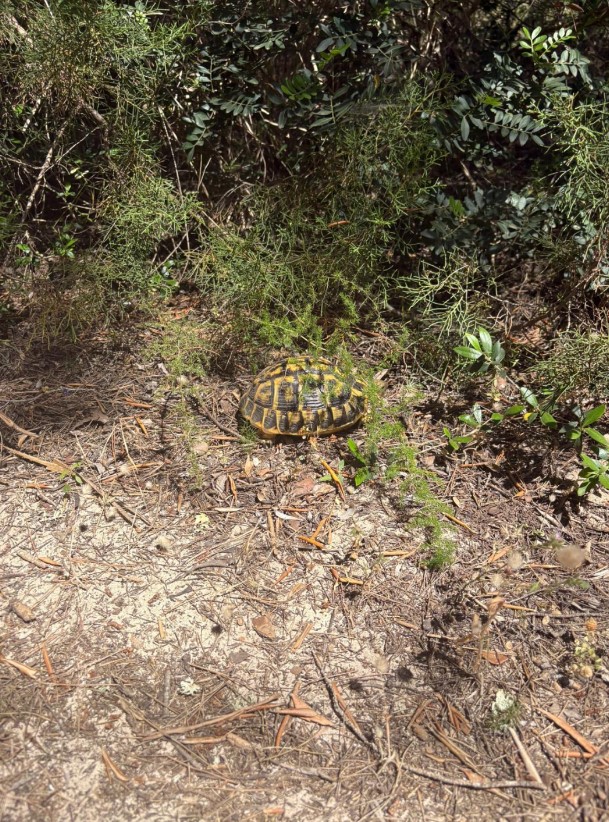
Creating a naturalistic, outdoor enclosure that closely replicates a species’ native habitat is the best way to support your tortoise’s health and wellbeing. As the UK’s climate cannot provide the same levels of warmth and sunlight found within their natural range, appropriate UVB lighting and supplementary heat should be provided in a secure shelter to ensure your tortoise remains healthy and thrives.
When designing your enclosure, take inspiration from your tortoise’s natural environment. For more information on your tortoises native habitats, visit Hermanni Haven website.
Enclosure Size and Position
We recommend for a medium-sized, adult Mediterranean tortoise:
- An outdoor enclosure with a minimum size of 3m x 3m, place in a sunny area, and…
- A heated indoor area with a minimum size of 1m x 1m, for temporary overnight accommodation and poor weather – this could be a dedicated tortoise shed, or a tortoise table.
Larger species will require significantly more space. For hatchlings and young tortoises see here. If you are considering rehoming a tortoise through us, we can help match you with a suitable species based on the space you have available.
Building an Outdoor Enclosure
A secure enclosure is essential, as tortoises are surprisingly accomplished escape artists. Your enclosure should:
- Have solid or opaque boundaries so the tortoise cannot see beyond the enclosure – wood planks, sleepers or decking boards can be fastened together and cut to desired size.
- Extend below ground level to prevent digging underneath.
- Be high enough to prevent climbing or escaping.


Setting up an Indoor Enclosure – Sheds & Tortoise Tables
In the UK, outdoor enclosures should be supplemented with a heated shelter, equipped with a heat lamp and UVB. This could be in the form of a dedicated shed, or an indoors tortoise table. For lighting recommendations please see here.
- Option 1: Outdoor Tortoise Accommodation: For an adult tortoise, a small insulated shed or dedicated tortoise house is ideal. This allows your tortoise to move freely between indoor and outdoor areas, helping it regulate its own body temperature naturally. Repurposed children’s play house, dog kennels or chicken co-ops can help reduce the set-up cost. In cooler months, it is important to ensure outdoor accommodation does not freeze overnight by using sufficient insulation and a small space heater.
- Option 2: Tortoise Tables: For hatchlings, juvenile and other small tortoises, a suitably sized indoor tortoise table can also provide temporary accommodation overnight or in poor weather. They can be made quickly and economically by turning a bookcase on its side and removing shelves.
We do not advise vivarium’s for Mediterranean tortoises as they do not provide enough space or suitable airflow. Transparent glass also casues tortoises to become stressed and will constantly try to escape. If you already have a vivarium, you can repurpose them for very young tortoises by removing the glass, and extending the front lip using opaque plastic or wood so they cannot escape.
TBC table photos


Choosing a Substrate
Your tortoise’s enclosure should be filled with a well-draining, sandy substrate, such as topsoil. For indoor enclosures, you can add play sand for a mixture of approximately 30–40% play sand, creating a substrate that is deep enough for your tortoise to dig, burrow, and bury itself naturally. This mix also provides an excellent nesting site for females.
Keep the substrate slightly moist, but not wet or damp, by lightly misting it occasionally – or in particularly warm weather by hosing it down.
Adding a variety of natural textures throughout the enclosure provides valuable enrichment and encourages exploration. Consider incorporating rocks, boulders, pebbles, slate, stepping stones, or old patio slabs to create a more stimulating and varied environment.
Avoid Grass-Only Enclosures: An enclosure consisting mainly of grass is not recommended because it offers little environmental enrichment, shelter from sun or predators and creates an overly damp environment.
Setting up an Outdoor Basking Spot – Cold Frames
Cold frames create a naturally warm basking area outside and extend the amount of time your tortoise can comfortably spend outdoors by offering some protection from UK weather. These don’t need to be expensive. You can get get cold frames second hand, or repurpose old fish tanks, windows and Perspex sheets.

Plants
A natural enclosure should contain a wide variety of plants to encourage natural foraging behaviour, and provide shade and shelter. This includes shrubs, ornamental grasses, and edible plants and flowers.
For a comprehensive list of tortoise-safe plants, we recommend The Tortoise Table. Please note this website is not species-specific – fruit and vegetables are not suitable and should be avoided for Mediterranean tortoises as they are not digested well and can cause gut issues and nutrition related health issues. For more information on healthy tortoise diet see here.
Purchasing seeds and plants:
– Tortoise Club shop for seeds
– British Wild Flower Plants plug plant mix specifically selected for tortoises!
See our care sheet here for a list of tortoise favourites


Enrichment
Consider adding a variety of enrichment to create a stimulating area that will encourage your tortoise to climb and explore, and places to hide:
- Overturned terracotta pots
- Logs and bark
- Rocks & slate
- Slopes and mounds
- Tunnels and other hiding places.


Nesting Sites
Females tortoises require a nesting site to be available. This should be built in a sunny spot, by making a mound of topsoil mixed with a small amount of play sand.
TBC photos
Greenhouses (Optional)
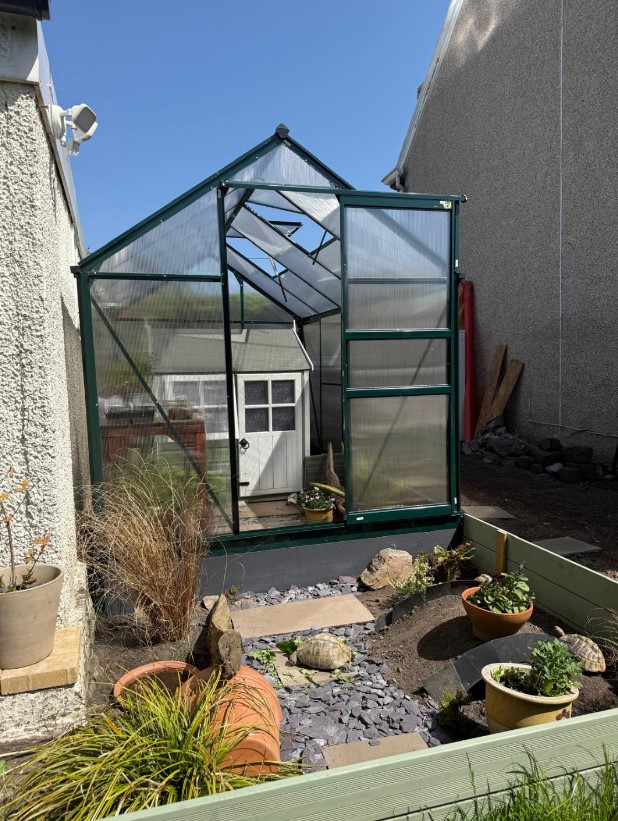
Greenhouses are particularly useful addition in cooler regions of the UK where the summer season is shorter, and extra warmth and protection is required. However, there are some important considerations, and it should only form part of a larger enclosure, rather than serving as the enclosure itself.
- A separate, well-insulated tortoise house is still essential as greenhouses offer very little insulation at night and temperatures can still easily fall below freezing.
- Standard greenhouse glass or polycarbonate blocks almost all beneficial UVB, so your tortoise must always have access to an outdoor enclosure where it can receive natural sunlight.
- Greenhouses can become extremely hot, even on mild or overcast day. Your tortoise must be free to move between the greenhouse and the outdoor enclosure at all times. Automatic windows, open doors and shade cloth can be used to help prevent temperatures from reaching dangerous levels.
Hatchlings and Juveniles
Outdoor enclosures for hatchlings and young and small tortoises require covered enclosures to add additional protection from predators, particularly birds.
For very small hatchlings, you can create a simple outdoor enclosure using a large plastic tub with solid sides and holes in the bottom for drainage (in case it rains), covered with a wire mesh. It is important for small tortoises that they can safety get in and out of a water bowl and that it is not too deep, add pebbles to the water dish to ensure they can get out easily.
Please refer to our separate hatchling and juvenile care sheets for more detailed guidance.


FAQ
What age can my tortoise go outside?
Your tortoise is never to young to go outside. Young tortoises and hatchlings do however require extra precautions to protect them from predators. Small contained enclosures such as a large plastic tub filled with top soil (to prevent it filling with water if it rains) with a wire mesh lid are ideal for hatchlings and will also stop you from loosing them. Please see the young and hatchling tortoise section above for examples.
When is it warm enough to put them outdoors?
We advise t-shirt weather! Although the use of a heated shed and cold frame can help extend the period your tortoise can be outdoors happily, and allows them to choose.
Can I leave my tortoise in the rain?
Although we don’t recommend leaving tortoises out in the rain all day, rainfall is a perfectly natural part of their environment in the wild and can encourage natural behaviours. In fact, many tortoises seem to enjoy the rain, as it often encourages them to drink, urinate, and become more active, all of which support their overall health and wellbeing.
As long as your tortoise has access to dry shelter—such as a small dog house, an overturned plant pot, or dense planting where it can escape the rain if it chooses—occasional rain showers are perfectly safe and can be a beneficial part of its outdoor environment.
Do I need to bring them inside at night?
Providing temperatures are not going to fall below 10 degrees Celsius, a tortoise can be safe in a hide at night if there are no predators. For peace of mind, is it a good idea to ensure your tortoise has a secure hide for nigh time, such as a small shed or dog house, or an indoor tortoise table.
Further Information
For more detailed advice and step-by-step guidance on enclosure construction, lighting, and heating, please refer to our enclosure care sheets.